
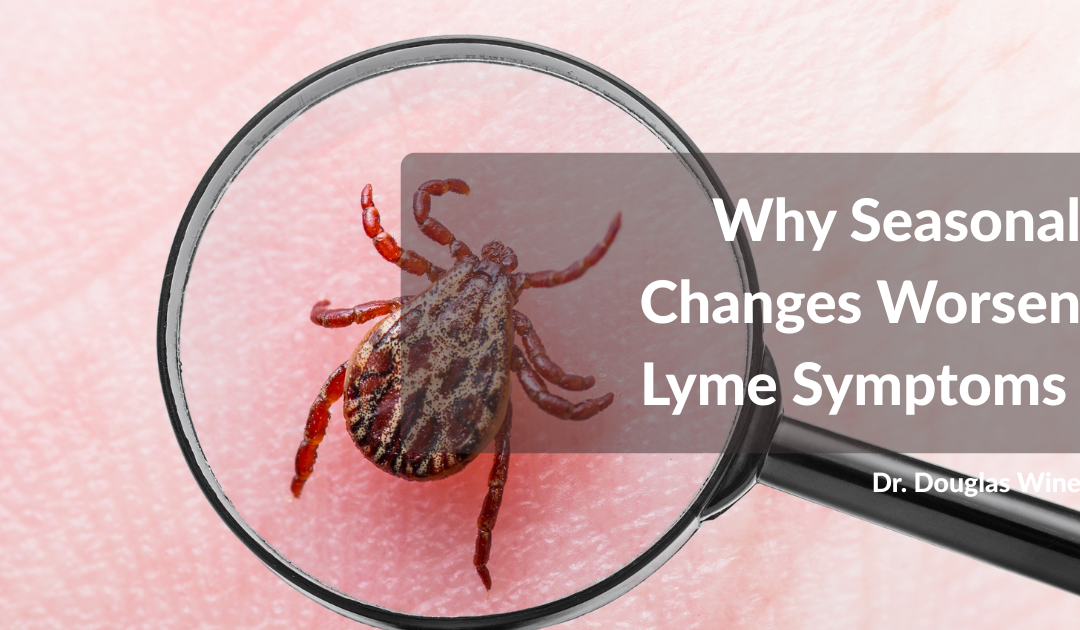
Many people living with Lyme disease notice a frustrating pattern: symptoms flare as the seasons change. Joint pain worsens in the fall, fatigue deepens in the winter, brain fog appears in early spring, or inflammation spikes during hot summer months. These fluctuations are not imagined, and they’re not simply about the weather feeling uncomfortable. Seasonal changes place real, measurable stress on the immune system—and for someone with Lyme disease, that stress can be enough to trigger symptom escalation.
Understanding why this happens requires looking at how the immune system, nervous system, and underlying infections respond to environmental shifts.
The Immune System Is Highly Seasonal by Design
The human immune system does not operate at a constant level year-round. Research has shown that immune activity follows seasonal rhythms influenced by daylight exposure, temperature, vitamin D levels, circadian signalling, and hormonal changes. In healthy individuals, the immune system adapts smoothly to these shifts. In people with Lyme disease, however, immune regulation is already compromised.
Borrelia burgdorferi—the bacteria responsible for Lyme disease—has evolved sophisticated ways to suppress and evade immune responses. Over time, this leads to immune exhaustion, chronic inflammation, and dysregulation rather than a balanced, effective defense. When seasonal stressors are introduced, the immune system often overreacts or underperforms, resulting in symptom flares.
Temperature Changes and Inflammatory Load
Cold weather commonly worsens joint pain, muscle stiffness, and nerve discomfort in Lyme patients. Lower temperatures cause blood vessels to constrict, reducing circulation to already inflamed or damaged tissues. Poor circulation means less oxygen delivery, slower waste removal, and increased inflammatory signalling.
For individuals with Lyme, where microcirculation is often impaired, this effect is magnified. Inflamed joints and connective tissues become more reactive, and pain thresholds drop. At the same time, cold stress increases cortisol demand. If the adrenal system is already strained—which is common in chronic Lyme—this can further destabilize immune balance.
Heat can also be problematic. High temperatures increase histamine release and place added strain on detoxification pathways. Many Lyme patients struggle with heat intolerance, dizziness, or fatigue in summer months because their autonomic nervous system cannot regulate temperature efficiently.
Daylight, Vitamin D, and Immune Signaling
Seasonal shifts in daylight directly influence immune behavior. Reduced sunlight exposure in fall and winter leads to lower vitamin D levels, a critical regulator of immune function. Vitamin D helps modulate inflammatory responses and supports proper T-cell activity. When levels drop, inflammation tends to rise.
In Lyme disease, where inflammation is already chronic, this shift can push the immune system further out of balance. Increased inflammatory cytokines contribute to fatigue, pain, mood changes, and cognitive symptoms.
Daylight also affects melatonin and circadian rhythms. Disrupted sleep cycles—common during seasonal transitions—impair immune repair processes that occur overnight. Poor sleep further weakens immune resilience, creating a feedback loop that worsens symptoms.
Seasonal Stress and the Nervous System
The immune system does not operate in isolation. It is tightly linked to the nervous system, particularly the autonomic nervous system. Seasonal changes represent a form of physiological stress that the nervous system must adapt to.
In Lyme patients, autonomic dysfunction is common. This can show up as poor temperature regulation, heart rate variability issues, digestive changes, or heightened stress responses. When seasons change, the nervous system often struggles to recalibrate, leading to increased sympathetic (“fight or flight”) activity. This state promotes inflammation and suppresses immune coordination.
The result is not a stronger immune response to infection, but a noisier, less effective one—producing more symptoms without resolving the underlying issue.
Hidden Infections and Seasonal Activation
Another factor often overlooked is the presence of co-infections and dormant pathogens. Viruses like Epstein-Barr, as well as bacterial co-infections such as Bartonella or Babesia, can become more active when the immune system is stressed.
Seasonal immune suppression—especially during winter—creates opportunities for these infections to reactivate. The immune system then diverts energy to managing multiple threats at once, increasing fatigue and inflammation while reducing symptom stability.
Why Symptom Flares Don’t Mean Treatment Failure
Seasonal flares are often interpreted as setbacks, but they don’t necessarily mean that progress has stopped. Instead, they reflect the immune system’s ongoing struggle to adapt while under chronic load. Seasonal changes simply expose areas where regulation is still fragile.
This is why Lyme recovery is rarely linear. Improvements may be followed by temporary symptom increases during times of environmental stress. Understanding this pattern can reduce fear and help patients focus on long-term regulation rather than short-term symptom swings.
Supporting Immune Stability Through Seasonal Shifts
Managing seasonal Lyme flares involves supporting immune balance, circulation, and nervous system regulation—not just suppressing symptoms. Consistency is key. Gentle movement, stable sleep routines, stress reduction, and therapies that support cellular energy and circulation can help buffer the immune system against seasonal stress.
Laser-based approaches, for example, are often used to support microcirculation, reduce inflammatory signaling, and improve mitochondrial function—areas that are particularly vulnerable during seasonal transitions.
Final Thoughts
Seasonal changes worsen Lyme symptoms because they challenge an immune system that is already working overtime. Temperature shifts, reduced sunlight, nervous system stress, and immune suppression all interact to amplify inflammation and fatigue. Recognizing these patterns allows patients to anticipate flares, adjust support strategies, and approach recovery with greater clarity and patience.
Lyme disease is not static—and neither is the immune system. Understanding how seasons influence both can make the journey more manageable and far less confusing.